

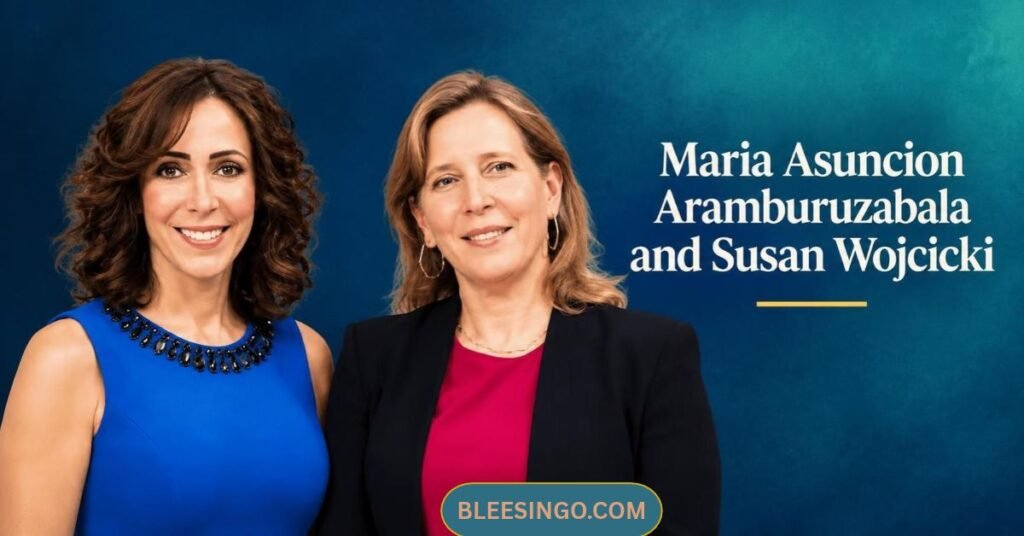
Maria Asuncion Aramburuzabala and Susan Wojcicki built influential careers in very different industries. Aramburuzabala is a Mexican businesswoman and investor linked to Grupo Modelo and Tresalia Capital. Wojcicki, the late American technology executive, helped shape Google’s advertising business and later led YouTube from 2014 to 2023. Readers often search for their net worth, their backgrounds, and any link between them.
Reliable reporting shows two careers built on different skills: capital allocation and corporate governance on one side, product development and platform leadership on the other. Their reported fortunes come from different years and measure different things so direct comparison misleads. No verified evidence shows a family tie or joint venture.
Who Is Maria Asuncion Aramburuzabala? Biography and Business Career

María Asunción Aramburuzabala Larregui is a Mexican businesswoman and investor associated with Grupo Modelo and Tresalia Capital. Her career shows how investment decisions, business ownership, and corporate board participation can create influence across several industries.
Unlike executives who run one operating company, she is known for investment management and corporate governance. In that environment, financial judgment, capital allocation, and long-term planning carry the most weight.
Quick Bio
| Detail | Information |
| Full name | María Asunción Aramburuzabala Larregui |
| Nationality | Mexican |
| Profession | Businesswoman and investor |
| Known for | Grupo Modelo and Tresalia Capital |
| Education | Accounting at Instituto Tecnológico Autónomo de México (ITAM) |
| Investment firm | Tresalia Capital |
| Tresalia founding year | 1996, according to Forbes México |
| Reported family fortune | US$9.3 billion in 2026, according to Forbes México |
| Business interests | Investment management, private equity, venture capital, and real estate |
Early Life, Education, and Business Background
Aramburuzabala studied accounting at the Instituto Tecnológico Autónomo de México, commonly known as ITAM. That training gave her a foundation in financial performance, business structures, and investment decisions.
Accounting knowledge matters when you evaluate companies. Financial statements show revenue, expenses, profitability, debt, and cash flow. Investors read these numbers before they decide whether a business deserves their money.
Her reputation rests on investment and business ownership rather than a single industry. That approach demands careful judgment. An established company may offer a recognizable brand and a loyal customer base. A newer business may promise faster growth but carries more financial uncertainty.
Business ownership adds another layer. Owners carry long-term responsibility for a company’s direction. They weigh dividends, reinvestment, debt, and leadership choices over many years. Her path shows why accounting skills and patient capital often work together in ownership-driven businesses.
Detailed accounts of her childhood and family background are not well documented in reliable public sources. For that reason, no unverified details appear here.
Tresalia Capital and Her Investment Strategy

Tresalia Capital sits at the center of Aramburuzabala’s professional identity. Forbes México describes the organization as a family office and reports that she founded it in 1996.
A family office manages a family’s wealth and related financial affairs. Depending on its structure, it may oversee investments, asset allocation, financial planning, and other long-term wealth activities.
Family offices differ from banks and mutual funds. They serve one family instead of many clients, so their goals tend to reflect that family’s time horizon. A family office may favor steady growth and capital preservation over quick gains. Forbes México’s description of Tresalia fits this model of long-term, diversified wealth management.
Tresalia’s reported areas of activity include asset management, private equity, venture capital, and real estate. Private equity generally means investing in companies outside public stock markets or buying significant ownership stakes. Venture capital usually backs younger businesses with growth potential. Real estate raises a different set of questions, such as property values, rental income, financing costs, and market demand.
A varied investment portfolio therefore requires each opportunity to be judged on its own financial merits. The work also differs from running a company day to day. Investors evaluate opportunities and allocate capital. Operating executives focus on products, employees, customers, and business performance.
Strategic investments of this kind depend on timing and patience. A private equity stake may take years to mature. A venture capital bet may fail while another succeeds. Real estate can offer steady income yet stay sensitive to interest rates and local demand. Spreading money across these categories is one way investors try to manage risk without relying on a single outcome.
Grupo Modelo and Her Corporate Board Experience
Grupo Modelo is a Mexican brewing company associated with Corona beer. Its history includes a major transaction with AB InBev, the international brewing group. AB InBev announced that the deal closed on June 4, 2013, with a reported value of US$20.1 billion. That figure describes the overall transaction. It does not describe Aramburuzabala’s personal earnings.
Corona is one of the best-known Mexican beer brands. A transaction of this scale naturally involves regulators, shareholders, and lengthy negotiations. The reported value reflects the size of the brewing business and not the share held by any single person.
The announcement also said she would join AB InBev’s board, subject to shareholder approval. Corporate board experience offers a chance to contribute to strategic oversight and major business decisions. Directors generally monitor management, corporate strategy, financial reporting, and risk. Chief executives handle daily operations.
Board seats at large international companies carry real duties. Directors review financial results, question management, and approve major strategic moves. Serving on the board of a global brewer or a beauty company calls for knowledge of finance, brands, and markets. Her accounting background and investment management experience fit that kind of oversight role.
Her board work extends beyond brewing. In December 2020, Coty described Mariasun Aramburuzabala Larregui as president of its board and CEO of Tresalia Capital. That announcement documents her position at that time. It should not be read as confirmation of her current role without a more recent corporate disclosure.
Who Was Susan Wojcicki? Google and YouTube Career
Susan Wojcicki was an American technology executive best known for her work at Google and her leadership of YouTube. She helped develop Google’s advertising business and later oversaw one of the world’s most prominent online video platforms.
She died on August 9, 2024, at age 56, after a two-year battle with non-small cell lung cancer, according to public statements about her death.
Quick Bio
| Detail | Information |
| Full name | Susan Diane Wojcicki |
| Nationality | American |
| Profession | Technology executive |
| Known for | Google and YouTube |
| Joined Google | 1999 |
| YouTube CEO | 2014–2023 |
| Successor at YouTube | Neal Mohan |
| Date of death | August 9, 2024 |
| Age at death | 56 |
| Reported net worth | About US$800 million, estimated by Forbes as reported by The Washington Post in August 2024 |
From Google’s Early Days to Senior Executive Leadership
Wojcicki joined Google in 1999 while the company was still building its search business. Over time she took part in initiatives that widened its products and helped create a sustainable advertising model.
Her work included Google Image Search, Google Video, and Google Books. She also contributed to AdSense, the program that lets participating website owners display advertisements and earn money from their content. Digital advertising became a major part of Google’s commercial model. It let businesses reach online audiences and produced revenue that supported Google’s broader services.
Each of those products tackled a different way people look for information. Image Search focused on pictures. Google Video focused on moving images. Google Books focused on text from printed works. Together they widened what a search company could offer.
AdSense also shows how Google linked content with commerce. Website owners supplied content, advertisers supplied budgets, and Google built the system that connected them. Similar thinking applies to online video platforms today.
Advertising products must balance several needs. Advertisers want relevant audiences. Website owners want income. Users expect services that stay useful and accessible.
Her career shows that technical innovation alone does not guarantee business success. Products also need sustainable revenue models and a clear grasp of customer needs. That link between product development and commercial strategy marked her rise to senior executive leadership.
Susan Wojcicki’s Role in YouTube’s Growth
Wojcicki became YouTube CEO in 2014. In February 2023, she announced that she would step down and that Neal Mohan would take over the role. She held the position until 2023.
During her tenure, YouTube kept developing as a platform that connects viewers, creators, advertisers, media organizations, and businesses. Its uses stretched well beyond entertainment. People rely on it for education, journalism, product demonstrations, professional training, and marketing.
Neal Mohan, who took over after her departure, continued to lead the platform as its CEO. The change closed a nine-year chapter that began in 2014.
Leading such a platform means balancing competing interests. Creators want to build audiences and earn money through online video monetization. Advertisers need suitable environments for their brands. Viewers expect useful content and a positive experience. Copyright holders and media organizations need systems that protect intellectual property.
Those duties make digital platform leadership complicated. Decisions about advertising, monetization, content moderation, misinformation, and user safety can affect creators and audiences in many countries. Her role therefore involved more than growing viewership. She oversaw a business whose long-term success depended on products, commercial relationships, creators, and user trust.
Online video platforms also face constant scrutiny. Changes to what content is allowed, how creators earn money, and how advertisers appear next to videos can trigger public debate. Leaders in this position must explain decisions to creators, regulators, and the public while keeping the business stable.
Digital Advertising, Technology, and Her Lasting Legacy
Wojcicki’s legacy includes contributions to digital advertising, product development, and online video. Her work at Google and YouTube connected technology with the commercial systems that support internet-based services.
She also supported greater participation by women in technology. Her advocacy covered education, workplace inclusion, and opportunities for women and girls in science, technology, engineering, and mathematics.
Advocacy for women in technology matters because the field has long faced questions about representation. Support for education and inclusion can widen the pool of future engineers, scientists, and executives. Her public voice on these issues gave that effort visibility across the technology industry.
Her career shows how technology executives can influence both business performance and the wider digital environment. Platform policies, advertising rules, and creator opportunities reach people far beyond a company’s employees and shareholders.
Her work remains relevant to ongoing discussions about internet businesses, digital advertising, online video, and the responsibilities of large technology platforms.
María Asunción Aramburuzabala and Susan Wojcicki: Key Career Differences
Both women reached senior professional positions. Their careers nevertheless developed in different industries and called for different skills.
Investment Management Versus Technology Leadership
Investment management centers on evaluating businesses, allocating money, assessing risk, and weighing potential returns. Investors can influence corporate decisions through ownership interests and board participation.
Technology leadership sets different priorities. Executives guide product teams, study user needs, manage organizational performance, and respond to shifting markets.
Both paths call for analytical thinking and sound judgment. The responsibilities still differ. An investor judges business opportunities and shapes oversight from the boardroom. An operating executive helps run the organization itself. Aramburuzabala is associated with investment decisions, business ownership, and corporate governance. Wojcicki’s career centered on digital products, advertising systems, executive leadership, and YouTube’s development.
| Comparison | María Asunción Aramburuzabala | Susan Wojcicki |
| Country | Mexico | United States |
| Main business associations | Grupo Modelo, Tresalia Capital | Google, YouTube |
| Primary field | Investment and corporate governance | Technology and digital platforms |
| Professional focus | Capital allocation and investment management | Product development and platform leadership |
| Important business area | Private equity, venture capital, real estate | Digital advertising and online video |
| Notable leadership role | Tresalia Capital leadership, as documented by Coty in 2020 | YouTube CEO from 2014 to 2023 |
How Grupo Modelo, Tresalia Capital, Google, and YouTube Shaped Their Careers
Grupo Modelo and Tresalia Capital help explain Aramburuzabala’s professional background. One connects her to a major brewing business. The other represents her investment activities across different sectors.
Google and YouTube provide the central context for Wojcicki’s career. Her work involved advertising products, digital services, and executive responsibility for a platform used by creators, businesses, and viewers.
These organizations show different ways of creating value. Investment firms allocate capital across opportunities. Technology platforms build services that connect users with commercial partners.
Scale also separates the two settings. A single investment decision can move large sums of money at once. A single product decision on a platform can change the experience of millions of people. Each type of leader learns to think carefully about consequences of that kind.
The careers can be compared in a meaningful way without assuming that the two women shared a business relationship.
María Asunción Aramburuzabala and Susan Wojcicki Net Worth Compared
Net worth estimates draw attention because they offer a financial view of successful careers. The reported figures for these two women, however, differ in date and in what they measure.
A family fortune is not necessarily one person’s personal net worth. Likewise, a published estimate is not an audited financial statement or an official declaration of assets.
Maria Asuncion Aramburuzabala’s Estimated Family Wealth
Forbes México reported a fortune of US$9.3 billion in 2026 for María Asunción Aramburuzabala and her family. The same publication reported a figure of roughly 9 billion dollars for 2025.
These amounts describe estimated family wealth. They are not the confirmed value of her individual bank accounts or personal assets. A family fortune can include holdings shared among relatives.
Her investment activities and business associations explain why wealth estimates feature so often in coverage of her career. Still, investment values change over time and public estimates may miss financial details.
Private companies and family holdings are especially hard to value. Publications such as Forbes México rely on public information and reasonable assumptions, so figures can shift from one year to the next. The move from roughly 9 billion dollars in 2025 to US$9.3 billion in 2026 shows how such estimates change.
The Grupo Modelo transaction deserves separate treatment. Its reported value of 20.1 billion dollars reflects the overall deal. It is not a confirmed payout to Aramburuzabala. Keeping the two numbers apart prevents a common mistake in any net worth comparison.
Susan Wojcicki’s Reported Net Worth
In August 2024, The Washington Post reported that Forbes estimated Wojcicki’s fortune at about US$800 million.
That estimate is a dated reference point. It is not a definitive account of every asset she held. Public estimates rely on available information about investments, ownership interests, and other holdings.
Her executive career included senior positions at Google and YouTube. Even so, professional titles and career achievements do not by themselves establish an exact net worth.
Equity compensation often forms a large share of senior technology executives’ wealth. Stock prices rise and fall, so estimates tied to such holdings change over time. That is a general feature of technology executive pay and not a claim about her specific holdings.
Why Their Wealth Estimates Are Not Directly Comparable
The 2026 figure of US$9.3 billion covers Aramburuzabala and her family. Wojcicki’s figure of about 800 million dollars was an estimate for her alone, reported in 2024.
The numbers measure different things and come from different periods. Presenting them as a precise comparison of two individuals’ personal wealth would mislead readers.
A meaningful comparison would need the following conditions:
- Figures from the same date
- Consistent definitions of what is being measured
- Reliable financial information from comparable sources
Without those conditions, the estimates are best read as separate indicators of reported wealth. They say something about each woman’s financial standing at a given moment. They say little about who achieved more.
Other differences complicate matters further. Rankings often rely on public filings, market prices, and reporter estimates. Private holdings are harder to value than listed shares. Currency movements and stock market swings can also change a figure within months. Readers should treat any single number as a snapshot and avoid drawing firm conclusions from it.
What Their Careers Teach Us About Women in Business
The careers of Aramburuzabala and Wojcicki show that professional influence can grow through investment, entrepreneurship, corporate governance, or technology leadership. They also show why business leaders must understand their own industries. The skills needed to assess investments differ from those needed to manage a global digital platform.
Financial Knowledge and Smarter Investment Decisions
Financial literacy helps leaders evaluate revenue, expenses, profitability, debt, and cash flow. These measures guide decisions about whether to invest in a company or expand its operations.
Aramburuzabala’s accounting education and investment career show the value of financial analysis. Wojcicki’s career shows how commercial understanding can strengthen product development and technical expertise. Together, they suggest that financial management skills help in many roles.
Smaller businesses benefit from the same habits. Reading a balance sheet, tracking cash flow, and understanding debt help owners avoid costly mistakes. Financial literacy supports confident investment decisions at any scale.
Recognizing Business Opportunities and Managing Risk
Business opportunities almost always involve uncertainty. Investors must decide which companies deserve capital. Technology executives must decide which products to build and how to answer competitors.
Good judgment starts with the available evidence. It also means understanding limits and weighing business risk management alongside possible returns. A promising idea does not guarantee success. Sound decisions account for both potential gains and potential losses.
Leaders can strengthen this skill by testing assumptions, asking for outside views, and reviewing past decisions honestly. Spreading money across several opportunities also limits the damage when one of them fails.
Adapting Leadership Skills to Different Industries
An investment leader may focus on portfolio performance, capital allocation, and corporate oversight. A technology executive may focus on product reliability, user experience, organizational performance, and sustainable growth.
Both roles demand communication, accountability, analytical thinking, and careful decisions. Effective executive leadership depends on applying those skills to the needs of a particular organization. No single formula fits every industry.
Moving between industries means learning new vocabulary, new customers, and new rules. Core habits such as clear communication and disciplined follow-through carry over even when the subject matter changes.
Building Professional Credibility and a Long-Term Reputation
Professional credibility grows through steady performance, responsible decisions, and trust. A senior title alone does not build a strong reputation. Leaders must show over time that they can handle serious responsibility.
Aramburuzabala’s investment and board experience represents one route to influence. Wojcicki’s executive career represents another. It linked technology leadership with digital services used by millions of people.
Reputation also depends on transparency. Leaders who explain their decisions and correct mistakes tend to earn lasting trust from partners, employees, and the public.
How Business Leaders Create Influence in Different Ways
Some leaders shape companies through investments, ownership interests, and board participation. Others guide product development, manage teams, and design services that reach large audiences.
These approaches can overlap but they are not identical. Understanding the difference explains how professionals in separate industries can gain real business influence without sharing a career path.
Influence can also come from public advocacy. Wojcicki’s support for women in technology shows how an executive can shape conversations beyond day-to-day management.
Are María Asunción Aramburuzabala and Susan Wojcicki Connected?
Many readers ask whether the two women had a personal or professional relationship. The public sources reviewed here do not show that they were relatives, colleagues, or business partners. Their documented careers point to different professional environments.
Several websites have published pieces that feature both names. That fact alone does not establish a shared history. Claims about a direct relationship need support from reliable sources.
Careful readers can test such claims with three simple checks. Look for a named source. Look for a date. Look for a statement from one of the people involved or from a company they led. Claims that fail those checks deserve skepticism.
Is There Evidence of a Personal or Family Relationship?
No verified evidence in the reviewed sources establishes a family relationship between Aramburuzabala and Wojcicki. Their professional biographies focus on different companies, industries, and responsibilities. Neither account points to a familial connection.
This finding should not be read as proof that the two never met. It simply means that public sources have not established a personal or family relationship.
Did María Asunción Aramburuzabala and Susan Wojcicki Work Together?
The reviewed sources do not identify a joint venture, a shared board appointment, or a named business partnership involving both women.
Aramburuzabala’s documented business associations include Tresalia Capital, Grupo Modelo, and corporate board work. Wojcicki’s career is tied mainly to Google, YouTube, and digital advertising.
These separate histories support a comparison of their achievements. They do not show that the women worked together or shared a venture.
Why Do Websites Compare These Two Businesswomen?
The reason their names appear together online has not been established by available records. Some publishers may want to compare influential women whose careers show different approaches to business leadership.
That explanation, however, remains an interpretation and not a verified fact. Search phrases, article titles, and repeated claims cannot prove a personal connection.
Readers should favor original corporate announcements, established business reporting, and official statements when they check claims about public figures. That habit helps separate documented information from speculation.
Frequently Asked Questions
Who Is Maria Asuncion Aramburuzabala?
Maria Asuncion Aramburuzabala is a Mexican businesswoman and investor known for Tresalia Capital and her association with Grupo Modelo. Her career includes investment management, private equity, venture capital, real estate, and corporate governance. Forbes México reported a 2026 fortune of US$9.3 billion for her and her family, not for her alone.
Who Was Susan Wojcicki?
Susan Wojcicki was an American technology executive who served as YouTube CEO from 2014 to 2023. She joined Google in 1999 and contributed to products including AdSense, Google Video, and Google Books. She died on August 9, 2024, at age 56, after a two-year battle with non-small cell lung cancer.
Are Maria Asuncion Aramburuzabala and Susan Wojcicki Related?
No verified public evidence reviewed here establishes a family relationship between María Asunción Aramburuzabala and Susan Wojcicki. Their documented careers center on different business environments. Aramburuzabala is associated with Tresalia Capital and Grupo Modelo. Wojcicki is known for her work at Google and YouTube.
Did María Asunción Aramburuzabala and Susan Wojcicki Work Together?
The public sources reviewed do not establish that the two women worked together. No verified joint venture, shared board appointment, or named business partnership was identified. Their careers can be compared through their business achievements without assuming a direct professional relationship.
What Were María Asunción Aramburuzabala and Susan Wojcicki’s Net Worth Estimates?
Forbes México reported a 2026 fortune of US$9.3 billion for Aramburuzabala and her family. In August 2024, The Washington Post reported Forbes’ estimate of Wojcicki’s fortune at about 800 million dollars. These figures cover different periods and different subjects. They are not directly comparable.
Conclusion
María Asunción Aramburuzabala and Susan Wojcicki built influential careers in different industries. Aramburuzabala is known for Tresalia Capital, Grupo Modelo, and corporate governance. Wojcicki helped build Google’s advertising business and led YouTube from 2014 to 2023.
Forbes México reported a 2026 family fortune of US$9.3 billion for Aramburuzabala. Forbes estimated Wojcicki’s 2024 net worth at about 800 million dollars. These figures measure different things and cover different years so you can’t compare them directly. Public sources also show no verified family tie or joint venture between the two women. Their stories simply show two different paths to lasting business influence.
